
May 8, 2026 · 9 min read
A lecturer's guide to engaging a 300-seat hall (without clickers)
Physical clickers are expensive, easy to lose, and a hassle to hand out. Here's how to run live concept checks in a big lecture using students' own phones - no app, no account.
A lecturer we spoke to had inherited a drawer of clickers for a 300-seat intro course. Half had dead batteries, a third never came back at the end of term, and registering them ate the first week. The fix wasn't a better clicker - it was no clicker at all. Students already carry a response device in their pocket; the job is just to let them use it without friction.
Tip
You do not need to be technical to follow this guide. Every step uses plain buttons in PollsLive - no coding, no app install for your audience.
Why the big hall goes quiet
In a packed lecture, asking "does everyone follow?" gets you a few nods from the front three rows. The students who are lost are exactly the ones who won't raise a hand. A live poll flips that: everyone answers at once, anonymously, and you see the real distribution - including the 40% who picked the plausible-but-wrong option.
The concept-check routine
- Open with a baseline. Before you teach the hard idea, drop a multiple-choice question on it. The split tells you where to spend your minutes.
- Teach, then re-ask the same question. The shift in the bars is the lesson landing in real time - and the class feels it move.
- Use a 1-5 confidence scale at transitions: "How solid is this before we build on it?" One number tells you whether to push on or recap.
- Close with an open-ended exit question - "What's still fuzzy?" - and skim the responses on the walk back to your office.
Watch the bars move
Here's the moment that sold the lecturer on it. Before teaching how recursion's base case works, she dropped a concept-check on the hall. Nearly half picked the plausible-but-wrong answer - invisible information she'd never have gotten from "does everyone follow?":
Before we dig in: what happens if a recursive function has no base case?
She taught the idea, then re-asked the exact same question two minutes later. The room felt the bars shift in real time:
Same question, after the explanation: no base case means…?
"That jump from 39 to 88 is the most useful feedback I get all lecture," she said. "And the students cheer the second bar - they can see themselves getting it."
Why no-login matters at lecture scale
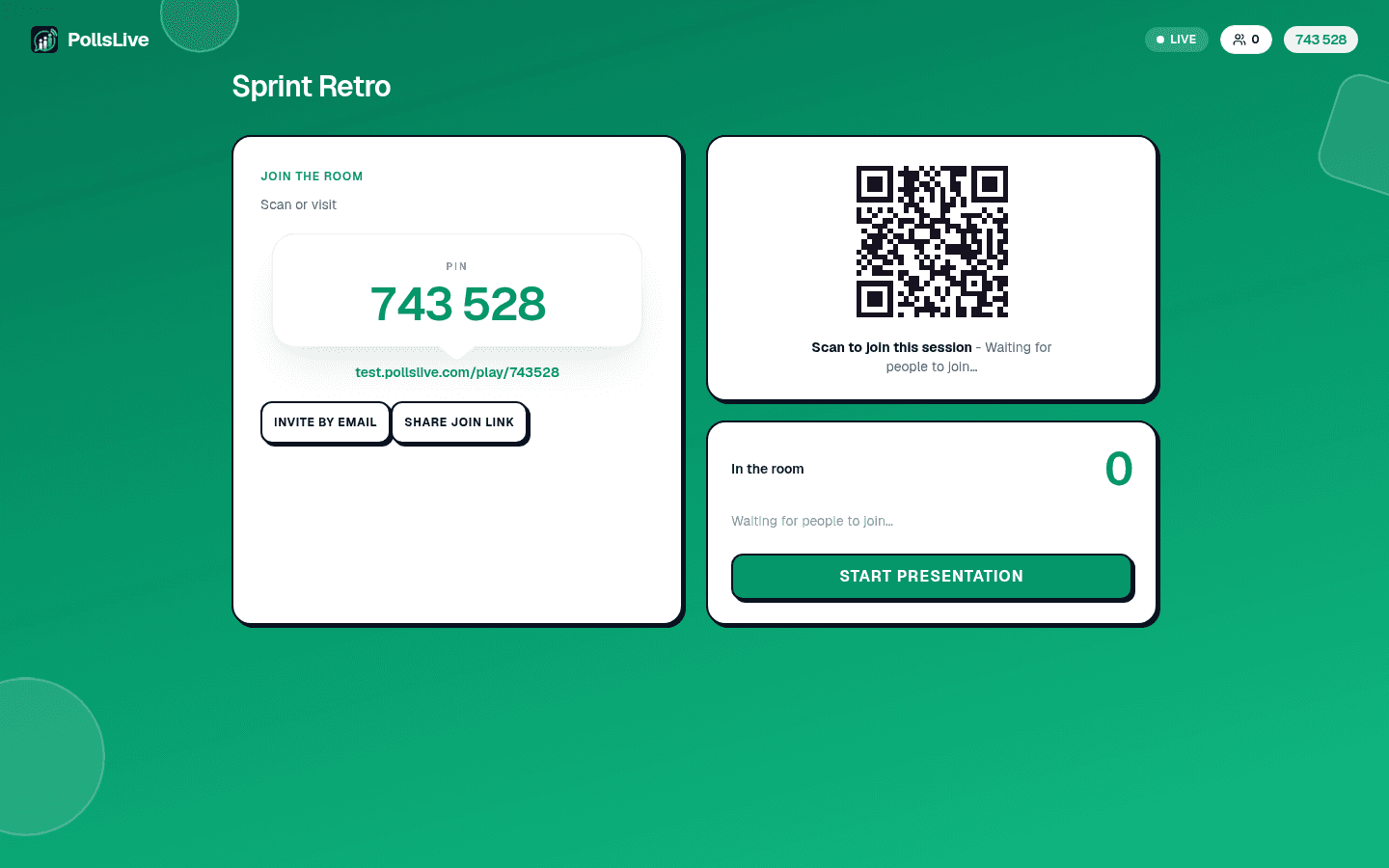
- 300 students joining by QR or PIN takes seconds - you don't lose ten minutes to logins or device pairing.
- No accounts means no roster of student data to manage or protect.
- It works on whatever phone is in the row - no "I forgot my clicker".
The clicker drawer was solving the wrong problem. The friction was never the hardware - it was making 300 people set anything up at all.
Peer instruction, just-in-time teaching, exit tickets - they all run on the same loop: ask, show the spread, adjust. More classroom patterns are on the PollsLive for education page, and the free tier covers a lot of a term's use before you ever need Pro.
Tip
Display the PIN on slide one and leave it up - students join once and stay in for every question.
Compare PollsLive vs Mentimeter. See /for/education.
Spin up a live poll right now - no signup, no app for your audience.
Create a free poll